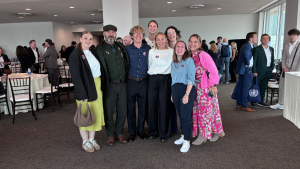
YOUTH VOICES FROM OKINAWA • IRELAND
Student story: Caoimhe O’Keeffe • Ireland
Reflections from the Federation EIL Global Youth Leadership Programme 2026
The enlightenment I experienced in Okinawa was truly powerful. I travelled to Japan as part of the Federation EIL Global Youth Leadership Programme 2026 and returned home with a new sense of hope, particularly around subjects such as peace, cultural heritage, sustainability and community.
These are lessons I want to bring home with me, especially within the political and cultural landscape of Northern Ireland.
Seeing Peace Beyond Theory
Peace can be difficult to understand in theory. It is an enormous concept, shaped by history, politics, memory and individual experiences. In Okinawa, however, I saw examples of how a society can actively engage with the challenge of peace.
Okinawa’s history of conflict has left a profound legacy. What struck me was the determination to remember that history while using remembrance as a means of encouraging future peace.
Visiting the Sakima Art Museum, the Himeyuri Museum and the Peace Memorial Museum was particularly powerful. Each offered a different way of confronting the human impact of conflict. Art, personal stories, education and remembrance became ways of respecting those who died while also communicating an important message to future generations.
I found the use of art especially moving. It demonstrated that peacebuilding does not exist solely in political institutions or negotiations. Art and culture can create spaces where difficult histories can be confronted, emotions expressed and conversations begun.
Coming from Northern Ireland, that resonated deeply with me.
Our histories are very different, and I would never suggest that the experiences of Okinawa and Northern Ireland are interchangeable. But seeing another society grapple with questions of conflict, memory and peace gave me a different perspective on what we can do at home.
It left me with hope that remembrance does not have to keep societies trapped in the past. It can also become part of building something better.
Protecting What Makes a Culture Different
Another aspect of Okinawa that stayed with me was the strength of its cultural heritage.
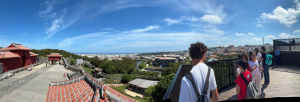
From Shuri Castle to the practice of placing Shisas outside homes and buildings, Okinawan identity was visible throughout my experience. These traditions felt like more than historical artefacts. They were living expressions of identity.
That matters in an increasingly interconnected world.
Globalisation brings enormous opportunities to learn from one another, but it can also create a sense that cultures are gradually being blended into something increasingly uniform. Okinawa reminded me that cultural differences do not have to divide us. They can be something positive, something to preserve, celebrate and share.
Protecting cultural heritage allows communities to remember where they came from while deciding what they want to carry forward.
Again, I found myself thinking about home.
Northern Ireland has its own complex relationship with identity, heritage and cultural expression. My experience in Okinawa encouraged me to think more about how cultural heritage can be celebrated in ways that create curiosity and understanding rather than division.
Rethinking Sustainability
The programme also expanded my understanding of the environment.
Learning about sustainability with a particular focus on water introduced me to environmental issues from a perspective I had not previously considered in such depth. It made something that can sometimes seem overwhelmingly global feel much more immediate.
Water connects communities, ecosystems and generations.
I came to better understand that sustainability is not simply about individual choices. It requires collective work and a shared recognition that protecting our environment is a responsibility we hold together.
Seeing Okinawa’s landscapes and ecosystems made that lesson even more tangible. Environmental protection was no longer just something to discuss, I was surrounded by the places and communities affected by it.
From Tokyo to Rural Okinawa
Japan also challenged my assumptions about the environments in which I feel most comfortable.
Kokusai Street offered one experience of busy urban life, while Tokyo gave me my first real experience of a metropolis. The scale, movement and constant activity were unlike anything I was accustomed to.
It was exciting, but it also taught me something about myself.
I realised that I am more drawn to quieter urban environments and rural life.
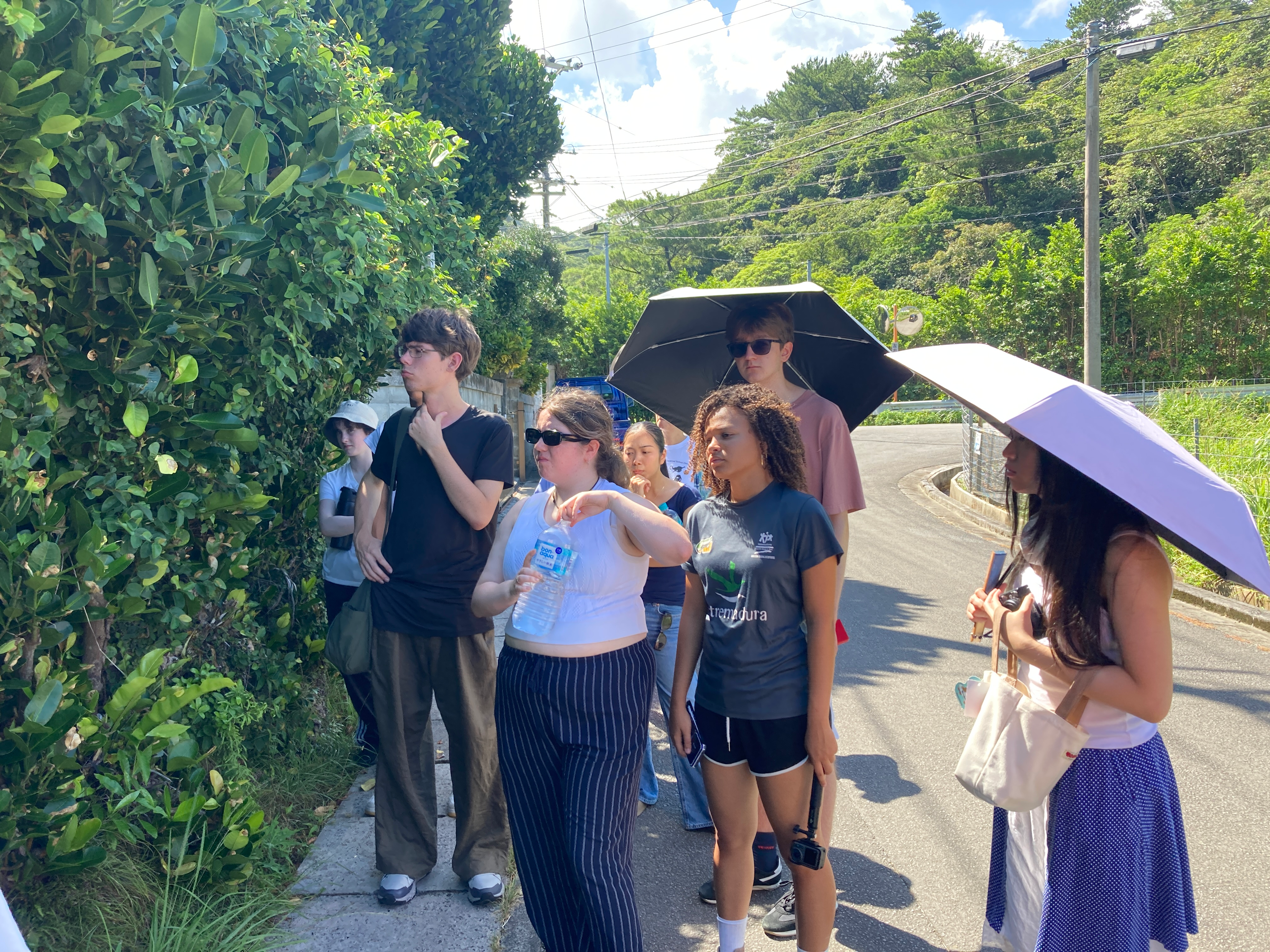
Spending time just outside Itoman and in Nakijin allowed me to experience another side of Japan. I encountered beautiful landscapes, different ecosystems and a pace of life that gave me a deeper appreciation for traditional Okinawan lifestyles.
Learning about Okinawa’s association with longevity and the so-called Blue Zones also encouraged me to think about simplicity differently, particularly through food, community and everyday routines.
There was something powerful about recognising that fulfilment does not necessarily have to come from having more. Sometimes simplicity itself has value.
Learning With ~ and From ~ Young People
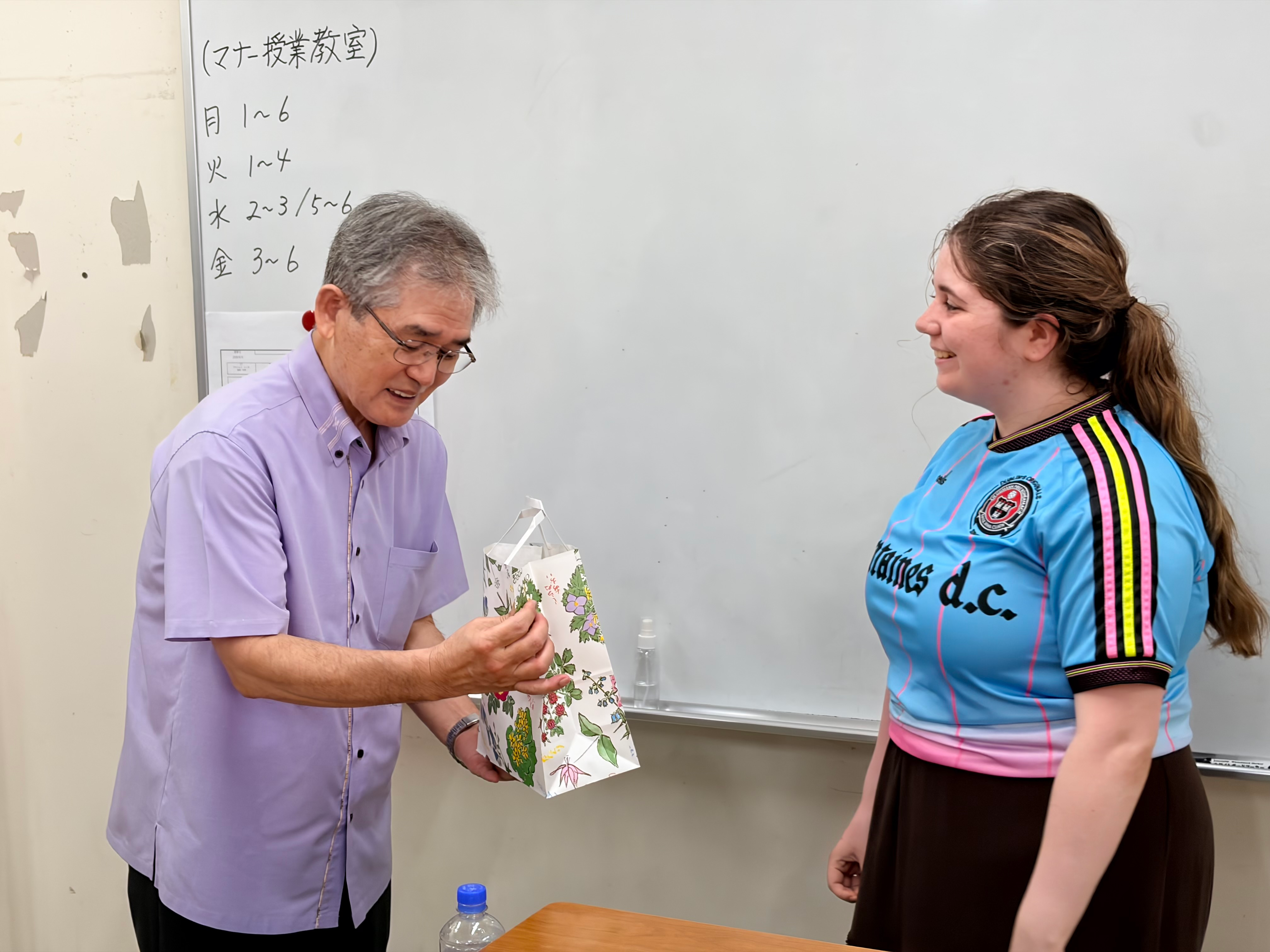
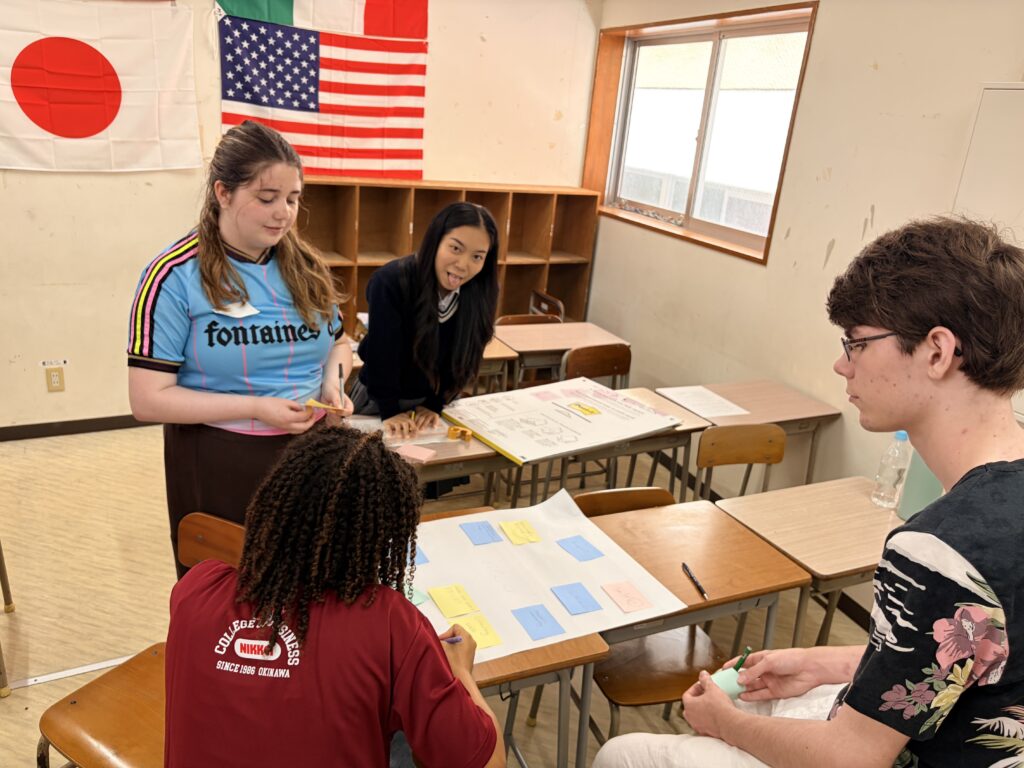
Some of my warmest memories came from visiting schools.
The students’ experiences differed significantly from my own schooling, including much longer days, and it was fascinating to learn about their routines and perspectives.
But the most meaningful part was the exchange.
I had the opportunity not only to hear from the students but also to share my own culture with them. Cultural exchange can sound like a formal concept until you experience it through conversations, laughter and ordinary moments.
One of my favourite memories was simply going out and playing volleyball together afterwards.
It was heartwarming because it reminded me that meaningful connections do not always require complicated programmes or perfectly planned conversations. Sometimes people from very different backgrounds can simply spend time together, learn from one another and find common ground.
Bringing Okinawa Home
The people I met and the experiences I had in Japan will never leave me.
I feel incredibly fortunate to have taken part in the Federation EIL Global Youth Leadership Programme 2026, and I am deeply grateful to everyone who made the experience possible.
But I do not want my experience to end with gratitude.
The real value of an opportunity like this lies in what happens afterwards.
I want to share what I learned with others and consider how those lessons can become meaningful actions at home. I want to explore what Okinawa’s approach to peace and remembrance might teach me about my own community. I want to think more carefully about how we protect cultural heritage while remaining open to other cultures. And I want to turn what I learned about sustainability into practical action rather than allowing it to remain simply an interesting experience from abroad.
Above all, Okinawa gave me hope.
It showed me communities remembering the devastation of conflict while advocating for peace; preserving traditions while engaging with the wider world; and recognising the importance of collective responsibility for the environment.
I travelled to Japan expecting to learn about another culture.
I returned home thinking differently about my own.
And perhaps that is one of the greatest gifts of cultural exchange: sometimes travelling thousands of miles away helps us see home more clearly.